
Unit
Years: 1600-1800

Economy & Society

Freedom & Equal Rights
Jamestown was founded on May 14, 1607 as the first permanent English settlement in North America. Jamestown was funded by the Virginia Company of London, a group of English investors who hoped to make money by setting up colonies in the New World. Jamestown was established in what is now the state of Virginia, on the banks of the James River in Virginia, named after King James I of England.
The English settlers quickly realized that additional labor would be needed to work and develop the colony further. This need gave rise to indentured servants. Indentured servants are people who sign a contract of “indenture” in order to receive something in exchange for work for a predetermined amount of time. Many Europeans, unable to afford the cost to travel to America, agreed to indentured servitude to pay for their passage, room and board.
The colonies began to be filled by Europeans and Africans through both formal or informal indentured servitude, although not always by free will. As far back as 1525, Africans of all ages were forcefully taken from their homes. In England, children could be taken from parents who were considered indigent, or unable to support themselves and their family. If orphaned, children could be contracted from locally controlled workhouses. Africans began to arrive in Jamestown in 1619. In Africa, European merchants also capitalized on existing systems of trade to purchase Africans.
Though their freedoms were limited, there were indentured servants, both Black and White, who initially did have freedoms and laws to protect them. Black and White indentured servants could both earn their freedom and become landowners. However, as the needs for labor grew, the cost of having as many indentured servants as needed was not cost-effective. The laws began to change in order to support the economic interests of landowners, taking away the freedoms of African and African American people. These changes included laws that not only enslaved those arriving from Africa but also enslaved their children, creating a hereditary system of slavery. As a result, by the late seventeenth century, a race-based system of slavery was fully developed in the American colonies.

Vocabulary & Key Terms:
Student Context:
Jamestown was founded on May 14, 1607 as the first permanent English settlement in North America. Jamestown was funded by the Virginia Company of London, a group of English investors who hoped to make money by setting up colonies in the New World. Jamestown was established in what is now the state of Virginia, on the banks of the James River in Virginia, named after King James I of England.
It was quickly realized that additional labor would be needed to work and develop the colony further. This need gave rise to Indentured servants. Indentured servants are people who sign a contract of “indenture” in order to receive something in exchange for work for a predetermined amount of time. Many Europeans, unable to afford the cost to travel to America, agreed to indentured servitude to pay for their passage, room and board.
The colonies began to be filled by Europeans and Africans through both formal or informal indentured servitude, although not always by free will. In England, children could be taken from parents who were considered indigent, or unable to support themselves and their family. If orphaned, children could be contracted from locally controlled workhouses. Africans began to arrive in Jamestown in 1619. In Africa, European merchants capitalized on existing systems of trade to purchase Africans.
Though their freedoms were limited, indentured servants, both Black and White, initially did have freedoms and laws to protect them. Black and White indentured servants could both earn their freedom and become landowners. However, as the needs for labor grew, the cost of having as many indentured servants as needed was not cost effective. The laws began to change, in order to support the economic interests of landowners, and subsequently taking away the freedoms of African and African American people. This included laws that not only enslaved those arriving from Africa but also enslaved their children creating a hereditary system of slavery. As a result, by the late seventeenth century, a race- based system of slavery was fully developed in the American colonies.

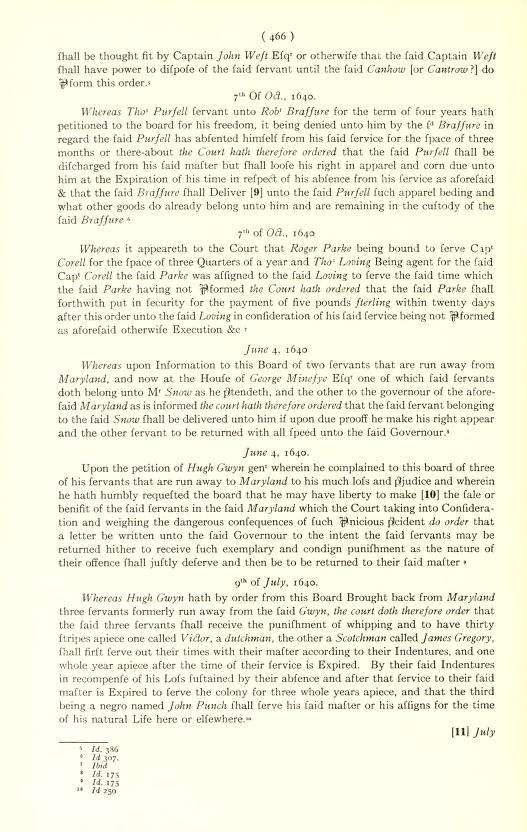
A person who separates wheat or other grain from chaff using a chaffing machine.
A person who works in a coal mine, typically extracting coal from underground seams or deposits.
A person who takes care of horses, especially at an inn or stable, or who is responsible for the maintenance and care of locomotives or other equipment at a railway depot or yard.
A gambling or gaming system in which prizes or rewards are distributed to participants based on chance or random selection, typically through the drawing of numbers or other means of randomization, and often used for fundraising, entertainment, or incentivizing participation.
A crude form of iron produced by smelting iron ore in a blast furnace and containing a high carbon content, typically between 3.5% and 4.5%, along with other impurities, and used as a primary source of iron for steelmaking and metallurgical processes, before further refining or processing into wrought iron or steel. Pig iron is characterized by its brittleness, high carbon content, and granular structure.
Poythress could refer to a surname or a proper noun, but without further context, it's challenging to provide a specific definition.
Historically, wenches referred to women or girls, often of lower social status, who worked as servants, maids, or laborers, particularly in domestic or household roles. The term can carry derogatory connotations and has been used to demean or objectify women in the past.